Isnin, November 29, 2010

KISAH DI SEBALIK BATU SUMPAH PERINGATAN KENINGAU

Kisah Di Sebalik Batu Sumpah Peringatan Keningau

Oleh Emin Madi

KENINGAU, 29 Nov (Bernama) -- Kecuali ayat yang ditulis dalam Bahasa Melayu menggunakan ejaan lama, `batu sumpah peringatan' di hadapan Pejabat Daerah Keningau kelihatan seperti batu biasa yang lain.

Kebanyakan pelawat langsung tidak ambil peduli akan maksud perkataan yang tertera pada plak yang dipasang pada batu itu yang berbentuk tapak kaki besar.

Tetapi selepas sambutan Hari Malaysia peringkat kebangsaan yang julung kali diadakan pada 16 Sept lepas di Sabah, batu bersejarah ini sedikit sebanyak menerima pengiktirafan.

KISAH DI SEBALIK BATU BERSEJARAH

Batu itu pada mulanya ditempatkan di dalam kawasan pejabat daerah lama Keningau, yang bersebelahan dengan hospital daerah, tetapi kemudian dipindahkan ke tapak sekarang.

Orang yang terlibat dengan batu sumpah peringatan ini ialah bekas setiausaha kerajaan negeri Tan Sri Richard Lind.

Menurut Lind, idea mengadakan batu sumpah itu timbul semasa usaha mengatasi bantahan awal ketua-ketua kaum pribumi terhadap langkah Sabah menyertai Persekutuan Malaysia.

"Beberapa ketua masyarakat pribumi terkemuka (yang dikenali sebagai Orang Kaya Kaya) pada awalnya bimbang dengan idea Sabah menyertai Persekutuan, kerana khuatir yang mereka tidak faham dengan apa yang tertulis di dalam Perlembagaan Persekutuan Malaysia," jelas Lind, yang pada masa itu merupakan Pegawai Daerah Keningau.

"Banyak rundingan dan perbincangan diadakan. Saya cuba sedaya yang boleh mengatasi rasa khuatir dan keraguan mereka," kata beliau kepada Bernama.

Selepas mengatasi keraguan mereka, muncul idea untuk mengadakan batu sumpah peringatan itu sebagai menunjukkan penerimaan mereka terhadap Gagasan Malaysia.

MENDAPATKAN BATU HIKMAH

Jadi usaha mencari batu yang sesuai untuk tujuan ini dimulakan.

"Sebagai pegawai daerah yang menguruskan tugas ini saya menyegerakan usaha supaya batu sumpah ini siap sebelum ulang tahun pertama kemerdekaan Sabah menerusi Malaysia," kata Lind.

Selepas memulakan usaha mencari batu yang sesuai, beliau menemui sebuah batu di tengah-tengah Sungai Pegalan, dekat Kampung Senagang, sebuah perkampungan kecil yang terletak di tepi Jalan Keningau-Tenom.

"Batu ini mempunyai kesemua ciri untuk digunakan sebagai batu sumpah. Bagaimanapun, mengeluarkannya dari sungai itu bukan mudah kerana ia berada di tengah-tengah sungai yang agak deras airnya," kata beliau.

Bagaimanapun, dengan bantuan seorang kontraktor binaan tempatan, Nip Kui Chiang, batu itu berjaya dinaikkan dari sungai dan dipindahkan ke tapak yang dipersetujui oleh para pemimpin tempatan.

Lind berkata beliau kemudian menempah sebuah plak daripada Thornycraft Shipyard di Singapura untuk dipasang pada batu itu.
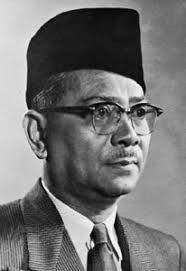
Para pemimpin tempatan mahu Ketua Menteri Persekutuan Tunku Abdul Rahman Putra Al-Haj merasmikan batu itu tetapi tugas itu diwakilkan kepada Menteri Buruh Persekutuan Tan Sri V. Manickavasagam ketika itu.

Pada 16 Sept 1964, bersempena ulang tahun pertama Hari Malaysia, ramai yang datang ke perkarangan Pejabat Daerah lama untuk menyaksikan majlis bersejarah merasmikan batu sumpah itu.

Antara yang hadir pada masa itu ialah Ketua Menteri Tun Fuad Stephens, presiden Pasok Momogun, parti pembangkang utama pada masa itu, Datuk G.S.Sundang, Setiausaha Persekutuan ketika itu Yeap Kee Aik, OKK Sedomon Gunsanad, OKK Angian Andulag, para pemimpin masyarakat, pegawai kerajaan, ketua masyarakat pribumi, ketua kampung serta wakil dari pelbagai kumpulan etnik.

Batu sumpah peringatan ini yang kini berusia 47 tahun, dengan beratnya lebih dua tan, merupakan batu simbolik yang mempamerkan syarat-syarat yang dipersetujui penduduk pribumi untuk menerima gagasan Malaysia.

Syarat yang tertera pada plak itu (dalam bahasa Melayu) menyatakan tiga rukun -- Kebebasan beragama di Sabah; kerajaan negeri Sabah mempunyai kuasa berhubung hal ehwal tanah di negeri ini; dan budaya serta tradisi penduduk pribumi di negeri ini dilindungi dan dipulihara oleh kerajaan.

Di sebaliknya, penduduk di pedalaman menjanjikan kesetiaan mereka kepada kerajaan Malaysia.

UPACARA MONINGOLIG

Pada tahun-tahun awal, satu upacara korban yang dipanggil `moningolig' diadakan di situ bersempena sambutan Hari Malaysia, yang dihadiri kira-kira 100 orang, termasuk ahli politik, petugas kerajaan, pelajar serta pemimpin masyarakat yang mewakili pelbagai kaum etnik.

Upacara ini juga merupakan penghargaan kepada para pemimpin zaman sebelum kemerdekaan untuk mengingatkan generasi muda akan peranan Sabah dalam mewujudkan Persekutuan Malaysia.

Menurut seorang warga tempatan, John Gitang, semasa acara korban julung kali apabila batu itu dirasmikan, satu perkara ganjil berlaku, seekor ayam jantan putih 'tidak mahu mati' walaupun selepas disembelih.

Gitang beranggapan bahawa ayam jantan itu telah mati dan membawanya pulang untuk dimakan tetapi semasa isterinya mahu membersihkannya, ayam itu tiba-tiba hidup semula.

Oleh kerana berasa khuatir yang keluarganya mungkin dirundung malang, keluarga ini tidak jadi memakannya dan ayam jantan itu bernasib baik terselamat.

Sementara itu, Timbalan Menteri Pembangunan Sumber Asli dan Alam Sekitar Tan Sri Joseph Kurup mencadangkan bahawa batu sumpah itu dipindahkan ke tempat yang lebih sesuai memandangkan nilai sejarahnya.

Beliau berkata lokasi sekarang ini tidak lagi sesuai kerana tapak itu akan digunakan untuk memperbesar pejabat daerah.

PERMOHONAN TANAH NT TIDAK LAGI PERLUKAN ULASAN KESESUAIAN JABATAN PERTANIAN

Permohonan tanah NT tidak lagi perlukan ulasan kesesuaian Jabatan Pertanian

KOTA KINABALU 28th November, 2010: Sejak awal Januari tahun ini sebarang permohonan tanah di bawah syarat Native Title (NT) bagi kelulusan 15 ekar ke bawah, bagi permohonan individu dan di bawah keluasan 50 ekar bagi permohonan berkumpulan untuk kegunaan selain daripada getah dan kelapa sawit, ulasan kesesuaian tanah daripada Jabatan Pertanian tidak diperlukan lagi.

Timbalan Ketua Menteri, Datuk Yahya Hussin berkata, permohonan terbabit adalah diproses terus oleh Pejabat Penolong Pemungut Hasil Tanah, selepas mendapat kelulusan daripada Jawatankuasa Penggunaan Tanah Daerah.

Beliau yang juga Menteri Pertanian dan Industri Makanan berkata, bagi permohonan, selain dari kategori itu, keputusan untuk memusatkan pemprosesan permohonan tanah adalh bertujuan untuk menyelaras bagi setiap permohonan yang diterima.

“Tindakan ini diambil, bagi mengelakkan percanggahan, dalam ulasan yang dibuat di peringkat daerah, dengan Ibu Pejabat Jabatan Pertanian,” katanya.

Yahya berkata, ketiadaan pegawai yang pakar dalam bidang kaji tanah di peringkat daerah juga menjadi sebab pemprosesan permohonan itu dilakukan di ibu pejabat.

Menurutnya, kelewatan memberikan ulasan kesesuaian tanah yang dipohon adalah juga disebabkan dokumen yang diterima tidak lengkap.

Permohonan yang tidak dilengkapkan dengan menanda kawasan dipohon dalam peta berskala 1:50,000 terpaksa dirujuk semula kepada Pejabat Permungut Hasil Tanah (PPHT) yang berkaitan.

Oleh itu, katanya, tindakan hanya dapat dibuat, setelah maklumat itu dilengkapi dan diterima oleh Jabatan Pertanian.

Yahya berkata, beberapa usaha telah diambil oleh Jabatan Pertanian untuk menangani isu ulasan kesesuaian tanah yang tertangguh.

“Di antara usaha itu, ialah dengan membentuk satu pasukan petugas khas yang terdiri daripada tiga Pegawai Penyelidik (Kaji Tanah) dan tiga Juruteknik Pertanian di Seksyen Pengurusan dan Sains Tanah, Jabatan Pertanain sejak Julai lalu untuk menangani tugasan berkenaan,” katanya.

Selain itu, katanya, Jabatan Pertanian juga sudahpun membangunkan data spatial tanah yang telah digunakan sepenuhnya bagi mempercepatkan pencapaian data dan seterusnya mempercepatkan ulasan tanah terbabit.

Jelasnya, dengan tindakan-tindakan tersebut, Ibu Pejabat Jabatan Pertanian telah dapat memperoses pada kadar sebanyak 900 hingga 1,000 permohonan ulasan kesesuaian tanah setiap bulan.

“Dengan kadar ini dijangka Jabatan Pertanian akan dapat menyelesaikan isu laporan kesesuaian yang tertangguh berkenaan dalam tempoh 18 bulan,” tambahnya.

----

NT land below 15 acres, individual and communal application below 50 acres, no need assessment, says Yahya

Sabtu, November 27, 2010

TOO MANY NEW DOCTORS AND TOO FEW HOSPITALS TO TRAIN THEM, THIS HAS GIVEN RISE TO CONCERN THAT THEY MAY NOT GET SUFFICIENT EXPERIENCE ?

Too many new doctors and too few hospitals to train them

PETALING JAYA: The number of medical housemen undergoing clinical training in most government hospitals has increased and this has given rise to concern that they may not get sufficient experience.

With new medical schools opening up locally and lower fees being offered at new institutions abroad, around 4,000 Malaysian medical students are expected to graduate annually from 350 universities all over the world in the coming years.

Senior Hospital Kuala Lumpur (HKL) consultant physician Datuk Dr S. Jeyaindran said each specialist was supervising four times as many housemen compared to a decade ago.

“Five years ago, one houseman looked after 10 patients in hospital wards at any one time but now it is one to four patients,” said Dr Jeyaindran, who is HKL department of medicine head and national head for medicine at the Health Ministry.

“The concern is that these interns are seeing fewer patients and hence, have fewer opportunities to carry out adequate procedures. In some hospitals, there are more housemen than patients.”

Dr Jeyaindran said they were not only concerned about the increase in numbers but also their attitude.

Some lack responsibility towards their patients,” he said, adding that there were also those who did not know how to give an accurate diagnosis and relied too much on investigative tools instead of clinical skills and getting the proper patient history.

Malaysian Medical Council ethics committee chairman Datuk Dr Abdul Hamid Abdul Kadir said several specialists had expressed concern about the large numbers and training hospitals were finding it difficult to cope.

“In the past, it was five housemen in each department but now it could be 20 to 30 for each department,” he said, adding that some specialists were overburdened by the workload.

Health Minister Datuk Seri Liow Tiong Lai said the ministry was aware of the issue and would be increasing the number of training hospitals.

He said the ideal ratio should be one specialist supervising five housemen with one houseman taking care of 14 hospital beds depending on discipline.

There were 38 hospitals providing training to more than 3,058 housemen last year.

However, the number increased to the current 6,253 housemen since the ministry increased the duration of housemanship from one year to two.

“This led to most hospitals, including those in Sabah and Sarawak, having an excess of housemen,” he said.

Hospitals that were chosen must be able to cater to six areas in which housemen need training – medical, surgical, paediatrics, obstetrics and gynaecology, orthopaedic and accident, and emergency, he said.

Liow also said that they would be getting 58 contract specialists from Egypt, India and Pakistan next month to help supervise housemen and reduce the burden of the specialists now.

He also said that the ministry had taken steps to overcome the lack of experience among housemen by making training compulsory for two years instead of one.

----

Time even for a movie during work

JKKK MINTA JALAN RAYA KE RUGADING RANAU-HOT SPRING DI NAIK TARAF SEBAGAI MENYOKONG USAHA KERAJAAN NEGERI TERUTAMANYA DALAM MEMPROMOSIKAN SABAH SEBAGAI NEGERI PELANCONGAN DI MATA DUNIA

JKKK minta jalan raya ke Rugading Ranau-Hot Spring di naik taraf

RANAU 26th November, 2010: Pengerusi Jawatankuasa Keselamatan Kampung (JKKK) Kampung Rugading, Ranau, Irin Kulangas menggesa pihak berwajip terutamanya kerajaan negeri untuk meneliti permohonan mereka supaya jalan raya yang menghubungkan kawasan air panas Rugading (Rugading’s hot Spring) dinaiktaraf sesuai dengan potensi kawasan tersebut sebagai kawasan pelancongan sekiranya dikomersilkan.

Irin berkata, perkara tersebut (naik taraf jalan) amat penting bagi memudahkan pelancong dalam dan luar negara yang berkunjung ke tempat tersebut untuk keluar dari kawasan Sungai Liwagu-Rugading setelah menjalankan aktiviti “rafting”.

“Ianya juga sebagai menyokong usaha kerajaan negeri terutamanya dalam mempromosikan Sabah sebagai negeri pelancongan di mata dunia,” tegasnya.

“Sebenarnya, sejak Sungai Liwagu dibuka untuk orang ramai melakukan aktiviti rafting, Rugading’s Hot Spring menjadi sering kali menjadi tumpuan persinggahan pelancong memandangkan ia sebagai satu-satunya tempat yang terdapatnya mata air panas untuk mereka berendam sesudah puas bermain rafting. Sukan rafting di Sungai Liwagu ini merupakan yang ketiga dibuka di Sabah selepas Sungai Padas dan Sungai Kiulu” tambah Irin.

Aktiviti rafting mula menjadi popular di kawasan tersebut sejak kebelakangan ini. Dari tempat permulaannya di Sungai Kenisir yang terletak 3 kilometer dari pekan Ranau, ianya menyelusuri secara teknikal sungai deras dan berakhir di kampung Nabutan sejauh 45 kilometer.

Tetapi, ianya khas untuk mereka yang gemar bermalam semasa aktiviti rafting, manakala bagi yang tidak bermalam, mereka boleh menghabiskan cabaran rafting mereka di kawasan Rugading’s Hot Spring dalam jarak 12 kilometer dari ‘tempat permulaan”.

Irin menegaskan, Rugading’s Hot Spring yang terletak kira-kira 6 kilometer jauhnya dari kampung Rugading, dan 16 kilometer dari pekan Ranau dilihat berpotensi dijadikan kawasan riadah dan pelancongan yang baru, memandangkan ianya memiliki mata air panas yang segar. Di samping mata air panas, terdapat juga air terjun yang berhampiran dengan kawasan tersebut.

----

http://kinapulidan.blogspot.com/2008/05/gotong-royong-membersihkan-pusat.html

Jumaat, November 26, 2010

THERE WILL NOT BE A THIRD PROGRAMME TO REGULARISE ILLEGAL IMMIGRANTS IN SABAH

No third chance for illegals

Kota Kinabalu, November 26, 2010: There will not be a third programme to regularise illegal immigrants in Sabah. Instead, operations to nab them will get underway soon.

State Immigration Department Director, Mohammad Mentek, said Thursday that the previous two programmes that were held between Aug. 1 to Oct. 31 in 2008, and July 27 to Oct. 31 last year were long enough for employers to get the necessary things done for their workers.

"In the first phase in 2008, we recorded about 312,837 illegals including their dependants (wife, children and parents) who were registered with the Immigration Department.

"Whereas last year, we had about 161,747 illegals and their dependants registering with the department.

We even had the levy charge reduced by 50 per cent," he said.

Therefore, he said taking into account that sufficient time frame has been given to employers to get things done for their workers, it would not be necessary to have another similar programme.

"Instead we will have operations to catch offenders anytime soon, since we do have our operations on and off all the time anyway," Mentek said, adding there are CCTVs in all the immigration counters at both terminals of the Kota Kinabalu International Airport.
In this regard, he said immigration officers are also rotated in their jobs every three years to avoid a lack of integrity among personnel.

LEMBAGA KHAS LANTIKAN TYT DAPATI ADA INDIVIDU TIDAK LAYAK MEMILIKI SIJIL ANAK NEGERI

Terimalah Keputusan Dengan Hati Terbuka, Kata Hajiji Kepada Adun DAP

PENAMPANG, 26 Nov (Bernama) -- Menteri Kerajaan Tempatan dan Perumahan Sabah Datuk Hajiji Mohd Noor meminta Anggota Dewan Undangan Negeri kawasan Sri Tanjung Jimmy Wong supaya menerima dengan hati terbuka keputusan sebuah lembaga khas bahawa beliau tidak layak memiliki Sijil Anak Negeri.

"Saya harap Yang Berhormat (Sri Tanjung) faham, dan sebagai seorang wakil rakyat yang bertanggungjawab, beliau seharusnya bekerjasama dalam perkara ini memandangkan keputusan itu dicapai oleh lembaga khas yang diwujudkan oleh kerajaan negeri dan dilantik oleh Yang Dipertua Negeri Sabah.

"Lembaga ini telah pun membuat keputusan dan beliau sepatutnya menerimanya," kata beliau kepada pemberita selepas melancarkan Hari Landskap Kebangsaan di Buhavan Square pada hari Jumaat.

Semalam, Hajiji, ketika menggulung perbahasan pada persidangan Dewan Undangan Negeri di sini, berkata lembaga khas itu yang dipengerusikan oleh setiausaha tetap kementerian berkenaan, ditubuhkan untuk meneliti ketulenan Sijil Anak Negeri wakil rakyat daripada DAP itu selepas isu berhubung dokumen itu dibangkitkan berulang kali oleh Adun Sekong, Datuk Samsudin Yahya dalam beberapa persidangan dewan sebelum ini.

Hajiji dipetik sebagai berkata lembaga itu telah pun meneliti dokumen berkenaan dan mendapati Wong tidak layak memiliki Sijil Anak Negeri dan keputusan lembaga itu diserahkan kepada Mahkamah Anak Negeri Kota Kinabalu untuk tindakan lanjut.

Sementara itu, dalam satu kenyataan hari ini, Wong berkata beliau tidak menolak kemungkinan untuk mencabar keputusan itu, sama ada di Mahkamah Anak Negeri atau mahkamah sivil.

----

Wong not eligible to hold Native Cert, says Hajiji

Selasa, November 23, 2010

HOW PWD BLEW AWAY HOPES OF THREE SCHOOLS DUE TO "INEFFICIENCY"

How PWD blew away hopes of three schools

November 23, 2010 THE Public Works Department (PWD) was chided over the loss of a RM1.5 million allocation from the Education Ministry due to "inefficiency" in submitting a report on three primary schools in Sebatik to the Tawau district education office.
Sebatik Assemblyman Abd Muis Picho said the Ministry had approved the allocation for repairs on the three schools - SK Kukusan, SK Bahagia and SK Jembatan Putih.

"Unfortunately due to delay in the report and evaluation from the Public Works Department, the RM1.5 million was retracted," he said while participating in the State 2011 Budget debate.

More saddening was the fact that the SK Kukusan canteen was facing collapse and could endanger about 300 pupils.

At the same time, SK Kukusan, SK Bahagia, SK Jembatan Putih as well as SK Perdana were also without Occupational Certificates (OC) and development plans.

The schools were built through allocations from the State Federal Development Department or JPPS.

But after the department closed shop (replaced by Sabah State Development Office) there was no follow-up action taken by the district education office to get the OCs for the schools.

"In fact, more disappointingly they claimed the Development Plan for the schools had gone missing," he said.

Muis also suggested that Sebatik be turned into a proper checkpoint centre for people from Indonesia and Philippines coming in on the sea route.

He also asked what other income alternative was there for Yayasan Sabah if the royalty from timber had been reduced.

SABAH VILLAGE CHIEFS GET RM800

Village chiefs get RM800

KOTA KINABALU 23rd November, 2010: Village chiefs in Sabah will have their monthly allowance increased to RM800 starting January next year.

Presently, they receive RM450 every month, with RM400 from the state government and the remaining RM50 contributed by the federal government.

Local Government and Housing Minister, Datuk Hajiji Mohd Noor said the decision was made following the announcement by Prime Minister Datuk Seri Najib Tun Razak in his recent 2011 Budget speech that community leaders will get a raise.

Hajiji was responding to a question from Sulabayan BN representative, Herman Mohamad.

The minister said the federal government will continue to contributeRM50 but the state government will increase its payment to RM750.

To a supplementary question, he said his ministry will submit a proposal to the Cabinet to increase the monthly allowance of other community leaders such as Native Chiefs, Representatives of Native Chiefs and Chinese community leaders.

Meanwhile, Assistant Minister of Community Development and Consumer Affairs, Datuk Herbert Timbun Lagadan said there are a total of 15,884 disabled persons registered in Sabah, with 2,037 of them enrolled in training programmes conducted by either government welfare agencies or at community centres.

From the figure, 6,498 have directly received financial assistance from the ministry while 5,461 obtained theirs from various other financial assistance schemes.

Herbert was answering a question from Membakut BN representative, Datuk Ariffin Arif who asked how many disabled have been identified in Sabah and if they were receiving any assistance from the government.

Rural Development Minister Datuk Ewon Ebin in his reply to a question from Tanjong Batu BN representative, Datuk Hamisa Samat, said that his ministry has implemented nine Hybrid Solar projects in Sabah involving a total cost of RM102.5 million.

The project which was introduced beginning 2004 to replace the less effective photovoltaic project has so far benefited 1,863 families in 22 villages who are now able to enjoy 24-hour electricity supply daily.

To a supplementary question, Ewon said the ministry was aware that many rural families were still unable to enjoy electricity despite the Hybrid Solar project in their area as they could not afford the cost for connecting and wiring.

He added a proposal had been submitted to have the ministry assist rural families in installing the proper connection and wiring system.

----

TOP MARKS FOR SABAH

Sabah is one of the only two states that received a rating of “good” for financial management from Auditor-general Tan Sri Ambrin Buang.

The remaining states were rated “satisfactory” and were advised to practise prudent spending while taking active steps to recover monies owned to them.

The Edge reported that Ambrin also told state governments to review their investments to ensure good yields and keep sufficient levels of liquidity in the state coffers.

----

Kenaikan elaun pengerusi JKKK perlu diperluas ke Sabah: Sairin

Kerajaan negeri berharap kenaikan elaun peng- erusi Jawatankuasa Kemajuan dan Keselamatan Kampung (JKKK) yang dinikmati di Semenanjung dapat diperluaskan ke negeri ini menerusi peruntukan Kerajaan Persekutuan.

Ahad, November 21, 2010

KEBANYAKAN KES BUNUH MELIBATKAN WARGA ASING BERMOTIFKAN DENDAM BERIKUTAN PERBALAHAN YANG TERJADI DI KAMPUNG HALAMAN MEREKA

Polis beri amaran kepada warga asing di Sabah

KOTA KINABALU 21st November, 2010: Polis mengeluarkan amaran kepada awam terutama sekali warga asing di negeri ini supaya tidak mengambil tindakan undang-undang di tangan mereka sendiri.

Pesuruhjaya Polis (PjP) Dato’ Hamza Taib berkata polis akan mengambil tindakan sepatutnya ke atas individu yang tidak mematuhi peraturan undang-undang dan melakukan kesalahan jenayah.

Hamza mengeluarkan amaran ini berikutan satu pergaduhan antara seorang warga asing dan tiga remaja dipercayai warga tempatan pada Jumaat.

Dalam kejadian yang berlaku kira-kira jam 12.30 tengah hari itu, warga asing berumur 18 tahun dan memiliki pasport mengalami kecederaan di kepala dipercayai di pukul dengan talipinggang semasa pergaduhan.

Siasatan menunjukkan motif pergaduhan antara mangsa yang tidak mempunyai pekerjaan dan dikenali sebagai Kay Tamtali dari Kampung Unggun, Menggatal, dengan suspek terjadi berikutan pertengkaran.

Mangsa telah pergi ke sebuah cyber café di Sulaman Central yang terletak di Jalan Sulaman dan semasa berada dalam premis berkenaan mangsa dikatakan telah bertengkar dengan salah seorang suspek.

Mangsa kemudian keluar dari premis tersebut diikuti oleh ketiga suspek dan berlaku pergaduhan.

Mangsa yang pengsan semasa kejadian telah dimasukkan ke dalam wad rawatan kecemasan (ICU) Hospital Likas.

“Saya menasihatkan warga asing yang berada di negeri ini supaya mematuhi peraturan undang-undang dan jangan meng- ambil tindakan undang-undang sesuka hati di tangan mereka sendiri terutama sekali jenayah keganasan seperti kes bunuh dan lain-lain,” kata Hamza.

Sejak beberapa tahun lalu, kebanyakan kes bunuh ynag dilapurkan melibatkan warga asing dengan mangsa yang berasal dari negara yang sama bermotifkan dendam berikutan perbalahan yang terjadi di kampung halaman mereka terdahulu.

“Saya menasihatkan warga asing yang mempunyai masalah peribadi dengan oranag senegara mereka sendiri supaya mencari jalan penyelesaian melalui pihak berkuasa negeri ini,” kata Hamza.

Rabu, November 17, 2010

PEMILIK VIRGIN ATLANTIC BAKAL JADI 'PRAMUGARI' AIRASIA

Pemilik Virgin Atlantic Bakal Jadi 'Pramugari' AirAsia

PETALING JAYA: Sebilangan penumpang AirAsia bertuah bakal dilayani oleh hartawan dan pemilik Virgin Atlantic, Richard Branson yang akan memakai sut lengkap pramugari syarikat penerbangan tambang murah itu.

Peluang yang mungkin datang hanya sekali itu berikutan pasukan Formula Satu (F1) Richard, Virgin Racing berada pada kedudukan di belakang pasukan F1 1Malaysia-Lotus yang diterajui Ketua Pegawai Eksekutif Kumpulan AirAsia, Datuk Seri Tony Fernandes.

Dalam pada itu, Tony turut menyahut cabaran Richard akan ‘bekerja’ sebagai pramugari Virgin Atlantic sekiranya pasukan F1 1Malaysia-Lotus tewas dengan pasukan lawannya.

Kedua-dua tokoh korporat itu membuat cabaran sewaktu bermulanya musim F1 pada Mac lalu dan berakhir di Litar Yas Marina, Abu Dhabi pada Ahad.

1Malaysia-Lotus berada pada kedudukan ke-10 manakala Virgin Racing pada kedudukan terakhir dalam perlumbaan melibatkan 12 pasukan itu.

Tony sebelum ini berkata, uniform (pakaian pramugari AirAsia) dilihat begitu sesuai dengan Richard dan penumpang pasti akan gembira untuk menerima layanan daripadanya.

Tetapi cabaran sebenarnya apabila mengenali Richard adalah menghalangnya daripada bertanya kepada penumpang kami ‘kopi, teh atau saya?” kata Tony.

Beliau menambah, Richard akan ‘ditugaskan’ untuk menjadi pramugari bagi penerbangan jarak jauh yang dikendalikan oleh AirAsia X.

“Kami mahu mengekalkannya dengan penerbangan jarak jauh berbanding penerbangan jarak dekat yang dikendalikan oleh AirAsia,” katanya lagi.

“Kami akan memohon untuk mendapatkan kebenaran daripada Jabatan Penerbangan Awam,” katanya.

Dalam pada itu, jurucakap AirAsia memberitahu mStar Online pada Selasa berkata, Richard bakal ‘menyertai’ sebagai pramugari syarikat penerbangan tambang murah tersebut pada Januari atau Februari tahun depan.

Katanya, berkemungkinan besar beliau (Richard) akan menyertai penerbangan AirAsia dari Kuala Lumpur ke London atau dari London ke Kuala Lumpur.

“Bagaimanapun, kami masih dalam perbincangan lebih terperinci sebelum membuat permohonan mengenainya kepada Jabatan Penerbangan Awam.

“Tony akan membuat pengumuman rasmi mengenai perkhabaran ini dalam waktu terdekat,” kata jurucakap itu.

----

‘Branson must shave his legs’

"UP TO NOVEMBER 10 THIS YEAR, SABAH RECORDED AN EXPENDITURE OF 78.04 PER CENT (RM16.095B) FROM THE NINTH MALAYSIA PLAN ALLOCATION OF RM20.625 BILLION," - MUSA

9MP projects: Sabah is on track

Kota Kinabalu November 16, 2010: Chief Minister Datuk Seri Musa Aman said the State Government is confident of achieving not less than 85 per cent of the overall Ninth Malaysia Plan (9MP) ceiling by end of this year.

He said the Government has completed 87 per cent of the project implementation.

"Up to November 10 this year, Sabah recorded an expenditure of 78.04 per cent (RM16.095b) from the Ninth Malaysia Plan allocation of RM20.625 billion," he said, after chairing the State Action Committee meeting at Wisma Innoprise.

From the projects' aspect, he said the number of delayed projects has gone down at 66 compared to 117 previously.

According to State Development Office (SDO) Officer, Matusin Sunsang, most of the delayed projects were schools, health facilities and infrastructure, among others.

However, Musa said the number of completed projects has also increased by 96 compared to what was reported during a meeting on Sept. 2.

This scenario, he said, is a positive sign that Sabah is on the right track and would be able to achieve its goal where development project implementation is concerned by end of the five-year plan.

In retrospect, he said there are ministries, government departments and agencies that are still not up-to-date as to updating of its project implementation data.

"This should not have happened because this would give an inaccurate picture on the status of the projects implementation on the field," he said.

Hence, he reminded the ministries, government departments and agencies involved in the implementation of the development projects in the state to pay serious attention to the matter.

He also said they must update the data relating to their projects under the Project Monitoring System II (SPPII) so that it could provide a more accurate picture of the scenario.

Apart from that, Musa also wants the Sabah SDO and Implementing and Co-ordination Unit under the Prime Minister's Department to enhance its role in monitoring through troubleshooting and intervention to identify, overcome and resolve the problems that delay the implementation of development projects in Sabah.

He said the monitoring activities through troubleshooting and intervention must be boldly and firmly implemented so that complex problems could be overcome through joint action by all parties involved.

If necessary, he said the problems should be presented during the State Action Committee meeting to be resolved.

Meanwhile, he urged civil servants, implementing agencies and contractors to cooperate to implement the responsibility entrusted to them.

"Only through this way, we can ensure the objectives in the development plan of the Ninth Malaysia Plan could be achieved," he said.

STUDENT COMMIT SUICIDE OVER FOOTAGE

Student hangs himself over footage

Keningau November 16, 2010: A Form Five student committed suicide after learning that fighting footage involving his younger sister was being circulated via handphone among their peers and villagers.

District Police Chief, DSP Zahari Mohamed said Japinus Angau, 17, of SMK Nabawan, hanged himself Monday following the recent fighting incident at their school two weeks ago.

The fight was apparently captured by his sister's friend through handphones and distributed around school as well as the family's village at Kg Lima, Nabawan.

Zahari said preliminary investigation revealed that Japinus may have been the target of ridicule from certain individuals and as a result decided to kill himself rather than to bear the shame following the incident.

According to the police report made by the boy's father Angau Sangorou, who also works at the school, Japinus hung himself with a nylon rope around his neck on a rambutan tree about 10 metres from their house.

SABAH NOT POOREST STATE

Sabah not poorest state

KOTA KINABALU November 15, 2010: The State Economic Planning Unit (EPU) of the Chief MinisterÕs Department has refuted the news report that Sabah is the poorest state in the country, saying poverty rate in the state was reduced from 24.2% in 2004 to 16.4% in 2007.

In a rebuttal issued yesterday, the State EPU said the World Bank had acknowledged in its Inclusive Growth report on 10 Nov that between 1976 and 2004, the State and Federal Government had made great strides in poverty reduction, so much so that the number of poor households in Sabah had been reduced from more than 50% in 1976 to 24.2% by the end of 2004.

ÒThese are facts which are borne out by official statistics based on the Household Income Survey (HIS) which is carried out at periodic intervals by the Department of Statistics.

ÒThe Sabah State EPU also wishes to state the fact that based on the Household Income Survey, the State Government under Datuk Seri Panglima Musa Haji Aman had successfully reduced the incidence of household poverty in Sabah from 24.2% in 2004 to 16.4% in 2007.

ÒIf not for the ensuing financial crisis in 2008 and 2009 and the resultant increase in the prices of many essential items such as food and transportation due to the reduction in fuel subsidies, the Sabah EPU is confident that the incidence of household poverty would have been reduced much further.

According to the State EPU, the mean monthly gross income of Sabahans had at the same time increased from RM2,593 in 2004 to RM3,102 in 2009, a very respectable average growth of 5.3% annually for the period 2004-2009, which is better than many states in Malaysia.

Meanwhile, income distribution data from the HIS also indicated that for the same period the number of Sabahans enjoying income of between RM1,000 to RM1,999 had increased substantially by 2009.

The Government is targeting  to totally eliminate  hardcore poverty by the end of this year.

ÒIt is regrettable that certain people have chosen to ignore the fact that even in developed countries, by their own standard measure of poverty, a substantial proportion of their population remains poor,Ó it said.

ÒFor example, the CIA World Fact Book, an often cited reference document, has stated that in 2004, 12% of the population of the United States and 14% of that of the United Kingdom in 2006 live below their respective poverty line and thus classified as poor.

ÒDo these make United Kingdom and United States poor countries or poorest amongst the developed countries which perform better than them?Ó

The State EPU said the World Bank team in the course of the preparation for the Inclusive Growth report had made a working visit to Sabah in September 2010 and had had discussions and consultations with a cross section of individuals and groups in Sabah both from the private and public sector including academics and NGOs.

ÒThe World Bank team had also visited and assessed the state poverty eradication programmes such as projects under the Mini Estate Sejahtera (MESEJ) program and the microcredit scheme under Yayasan Usaha Maju, a State Government agency providing small loans to the poor and low income group especially women to allow them to do small scale businesses and economic activities that can provide sustainable incomes for them and their families.

ÒIt is a fact that the World Bank was impressed with these programmes, the tremendous success in the reduction of poverty in Sabah and the State GovernmentÕs dedication and continuing efforts to eradicate poverty in Sabah.Ó

It said that other than the poverty eradication programmes mentioned earlier such as MESEJ, the State Government is presently undertaking many other poverty programmes aimed at not only raising the income of the poor but also ensuring a better quality of life for poor families in both rural and urban areas especially in housing, education and health.

The State Government has embarked on the implementation of the AGROPOLITAN projects in areas with pockets of poverty in Sabah such as Banggi, Pitas, Tongod, Kota Belud, Tenom and Sook/Nabawan under the 9th Malaysia Plan.

On completion these Agropolitan projects would significantly contribute to reducing poverty further in Sabah.

Likewise, the Federal Government had also embarked on the implementation of the six National Key Results Areas (NKRAs) (2010-2012).

One of these is the NKRA pertaining to the development of Rural Basic Infrastructures in Sabah.

The plan calls for the construction of 1,020 kilometres of rural roads, provision of electricity and water supply to ensure that 95% and 90% of rural folks in Sabah obtain these services, and construction of new houses and repair of existing ones involving 12,494 of poor households.

Meanwhile, the NKRA for Low Income Households had set target to raise income level of the bottom 40 % of households through the 1ZAM programs in four main areas Ð agriculture, business, jobs and training.

The State EPU expressed confidence that with all these untiring efforts and dedication to development, Sabah will definitely prosper and on track to become a developed state, where the fruits of development will be shared equitably by all Sabahans.

ELAUN JKKK SEMENANJUNG DAN SABAH PERLU DISELARAS

Elaun JKKK Semenanjung dan Sabah perlu diselaras, kata Saidi

KENINGAU 15th November, 2010: Pengerusi JKKK Kg. Linsudan, Saidi Ekang, menyuarakan kekecewaannya atas penjelasan Presiden Parti Bersatu Sabah (PBS) Tan Sri Joseph Pairin Kitingan mengenai pertambahan elaun bulanan Pengerusi JKKK sebanyak RM 800 dalam bajet tahun depan itu, hanyalah untuk Pengerusi JKKK di peringkat Persekutuan.

Pertambahan elaun yang tidak melibatkan para pemimpin masyarakat di peringkat Negeri itu dinyatakan dalam ucapan pengulungan Tan Sri Josepk Pairin Kitingan di Perhimpunan AgungPBS pada Khamis lalu, yang di siarkan dalam akhbar tempatan bertarikh 12 November 2010.

Saidi mempersoalkan tindakan pihak kerajaan mengumumkan kenaikan elaun hampir seratus peratus kepada para pemimpin masyarakat di peringkat Persekutuan dan menafikan keistimewaan yang sama bagi para pemimpin masyarakat di peringkat Negeri khususnya di Sabah.

“ Elaun berkenaan yang diumumkan dalam bajet itu sepatutnya dinikmati oleh semua para pemimpin masyarakat di seluruh Malaysia dan bukan kawasan terpilih, perkara ini pasti menjadi isu dan akan mengundang persepsi yang negatif kepada lebih 3,000 pengerusi JKKK di seluruh Negeri Sabah, kata Saidi.

“Apakah peranan pengerusi JKKK lebih besar di peringkat Persekutuan yang dilihat kawasan yang sudah lebih maju berbanding peranan pengerusi JKKK di kawasan luar bandar di Negeri Sabah, yang hanya dibayar elaun RM200 sebulan, kenapa tidak di selaraskan”. Soalnya.

Beliau yang juga seorang graduan daripada Universiti Teknologi Malaysia (UTM) dalam bidang Pengurusan Perniagaan Kejuruteraan berkata, umum maklum bahawa keadaan hidup masyarakat di kawasan luar bandar masih ketinggalan jauh dalam arus pembangunan sosio ekonomi maka peranan ini lah tugas yang terpaksa di galas oleh para pemimpin masyarakat di Sabah.

“Bukan saja memikirkan soal kemajuan kawasan masing-masing tetapi Pengerusi-Pengerusi berkenaan akan diberi tanggung jawab lebih besar iaitu memujuk anak-anak buahnya supaya sentiasa menyokong pihak kerajaan pada setiap kali pilihanraya diadakan,” tambahnya.

Beliau bersama semua Pengerusi-pengerusi JKKK di kawasan Pedalaman Keningau merayu kepada pimpinan kerajaan Negeri Sabah khususnya Ahli Parlimen Keningau Tan Seri Joseph Pairin Kitingan supaya mengusulkan isu ini di dalam persidangan Parlimen yang sedang bersidang sehingga Disember ini.

“Gagasan 1Malaysia yang telah diilhamkan oleh Perdana Menteri Datuk Seri Najib Tun Razak haruslah direalisasikan melalui penyelarasan pembayaran elaun para pemimpin masyarakat di seluruh Negara”, tambahnya.

Katanya, bermula Januari tahun depan jurang bayaran elaun RM800 bagi Pengerusi JKKK di peringkat Persekutuan dan hanya RM 200 untuk Pengerusi JKKK di peringkat Negeri adalah sangat jauh berbeza.

Sabtu, November 13, 2010

FOREIGN CHILDREN BEING USED TO SMUGGLE CIGARETTES INTO SABAH

Making use of minors

Kota Kinabalu November 13, 2010: Minors are being used to smuggle cigarettes into the State.

Their involvement came to light when marine police nabbed three Filipinos, including a 12-year-old boy, and seized 3,700 packets of cigarettes in an operation at Kuala Putatan 2, Friday.

Also confiscated were a Proton Saga car and a speedboat.

The confiscated items were worth about RM60,000.

City Marine Commanding Officer Assistant Superintendent Mohd Aris Jambul said police believe the contraband was brought in from Mangsi in the Philippines by someone else and made a stop at a nearby island before another skipper took over.

"We believe they are using children in order to avoid detection. They (the trio) were paid RM15 per boat," he added.

The operation followed Tuesday's arrest of two Filipinos and the seizure of smuggled cigarettes in the State capital.

During a five-hour surveillance, he said marine personnel saw a boat with its skipper, a 14-old-boy and the Saga at about 1am on the beach in the area.

"The car was driven by a 21-year-old man together with the 12-year-old boy. They were loading boxes from the boat to the car and marine police immediately approached and introduced themselves.

"All three IMM13 holders were paid to bring and load the smuggled items," Aris said, adding the trio had tried to flee upon seeing police.

He said police seized 3,200 packets of LA cigarettes and 500 packets of Premium Gold cigarettes from them and towed the vehicle and speedboat to the City Marine Headquarters.

On Tuesday, the force detained two Filipinos in their 50s and seized 1,940 packets of smuggled cigarettes worth RM24,118 in what used to be an old hotel at Sinsuran.

The cigarettes were also brought in from Mangsi to be distributed to street peddlers and several individuals here.

Thus far, police have recorded 10 such cases involving smuggled cigarettes and alcohol worth RM474,760 in the State capital.

------


Jumaat, November 12, 2010

RESOLVING THE PERENNIAL SABAH PROBLEMS WOULD BE A POSITIVE START TO THE 13TH GENERAL ELECTION - PAIRIN

Perennial Sabah problems must be fixed – Pairin

PENAMPANG November 12, 2010: Parti Bersatu Sabah (PBS) president Tan Sri Pairin Kitingan has again stressed on the need for the Barisan Nasional government to resolve the perennial problems affecting Sabah.

Pairin, in his welcoming address at the opening PBS delegates meeting by Deputy Prime Minister Tan Sri Muhyiddin Yassin at Hongkod Koisaan here yesterday, said resolving the problems would be a positive start to the 13th general election.

According to him, PBS as well as other BN component parties in Sabah have been highlighting these issues for a long time but no concrete solution to the problems has been reached.

Among the issues which have continuously been raised were the perennial illegal immigrant problem, unbalanced infrastructure development and education which included the facilities and requirements of mission schools and Chinese vernacular schools.

“While PBS affirms its support to the 1Malaysia concept as well as the government transformation programs, we Sabahans want to see the illegal immigrants issue, unemployment, infrastructure problems and Bumiputeras getting a piece of the economy ‘cake’ be given serious attention.

“This would create a new page in history and is a positive move before the 13th general election,” Pairin who is also Deputy Chief Minister cum Infrastructure Development Minister said.

He also added that this year’s congress was a milestone for the party as it signifies PBS’ struggles in the last 25 years which was full of bitter sweet memories as well as difficult challenges.

“PBS has left and returned to BN’s fold… all these experiences have made the party more matured in its political struggles in Sabah and we will continue to ensure that the party remains strong as well as to continuously cooperate with BN and its component parties,” he said.

As the Coalition’s second largest component party in Sabah, PBS is committed in assisting the government to realise the national mission for the country, he said adding that they are spurred by the innovative and creative initiatives as well as transformation approaches implemented by Prime Minister Datuk Seri Najib Tun Razak to bring Malaysia a step forward in the international arena.

WORLD BANK IDENTIFIES CRITICAL ISSUES OF SABAH ACCURATELY

World Bank identifies critical issues of Sabah accurately

KOTA KINABALU November 11, 2010: The World Bank has accurately identified poverty and regional disparity issues as the main critical concerns of Sabah.

Assistant Minister in the Chief Minister’s Department Datuk Nasrun Mansur in disclosing this, believed the World Bank team had managed to gather all the relevant information needed to ensure the State’s development needs and challenges have also been taken into account in their report.

“We are indeed very fortunate to capitalize on the World Bank’s vast experience in addressing these issues to advise us on the most holistic approach to address these challenges.

“The Malaysian government to a certain extent has made much progress in its efforts to reduce poverty and narrow the regional disparity within the state of Sabah. Hardcore poverty in the state has reduced from 6.5 per cent in 2004 to 3.7 per cent in 2007 and it is targeted to be eliminated by end of this year,” said Nasrun at the launching of The Third Edition of Malaysia Economic Monitor Report – “Inclusive Growth” at Shangri-La’s Tanjung Aru Hotel yesterday.

According to Nasrun, health facilities and services have also increased with an additional 180 rural clinics established and increase in the number of hospital beds to 3,834.

Doctor-population ratio has also registered significant reduction from the ration of one doctor to 2,935 persons in 2006 to one doctor serving 2,464 persons last year.

He added the number of schools, including technical schools, had also increased to 1,277 this year.

“However, if we compare regionally with other states in Peninsular Malaysia, there are still much to be desired in terms of both hard and soft infrastructure including health, education and social facilities and services and human resource development.

“Deep pockets of poverty exist in certain socio-economic groups as well as in certain areas in the State, where the poor have least access to services and employment opportunities,” he added.

Through the National Government Program and the National Economic Transformation Program revealed recently, Nasrun said there had been much emphasis in rural development and human resource development as reflected in the National Key Result Areas.

He added a large sum of the development allocation would be channeled to the State to help uplift the living standards of the poor in particular through improving the supply of water and electricity, rural roads and so on.

“We are very fortunate as we have the World Bank team to brief, guide and advise us on the prevailing challenges and new challenges that are emerging as our nation prepares to progress into the league of high income nations.

“The World Bank Malaysia Economic Monitor Report with the theme of ‘Inclusive Growth’ will enlighten on how ‘inclusive strategies’ are necessary to confront these new realities,” he said.

WORLD BANK REPORT CONFIRMED SABAH STILL THE POOREST STATE

World Bank: Sabah still the poorest

Kota Kinabalu, November 11, 2010: A World Bank report has confirmed that Sabah is still the poorest State in the country.

Although efforts by the Government have somewhat brought down the poverty line, the World Bank's 2010 Malaysia Economic Monitor (MEM) Report showed that Sabahans continue to struggle to make ends meet with this being more evident in the outskirts of town.

"Even though the levels have gone down, the deep pockets of poverty are here in Sabah," said World Bank Human Development Sector Director (East Asia and Pacific Region), Emmanuel Jimenez.

"Sabah has about 10 per cent of the Malaysian population but more than 40 per cent of all poor people in Malaysia live in Sabah."

Speaking after presenting the MEM report, Wednesday, he said if one were to compare that figure to that of Selangor, which has 20 to 25 per cent of the population, the percentage of poor people was drastically lower, which is less than 10 per cent.

"Whatever poor people remaining in Malaysia, many of them are here in Sabah, and most of them live in the rural areas (many involving ethnic) groups such as the Rungus, Suluk and Orang Sungai É according to the statistics, they remain very high," he said.

The World Bank's 2010 MEM report focuses more on the medium and long term challenges towards economic growth in Malaysia, with poverty and inequality being the angle.

Towards this end, achieving the nation's Vision 2020 goal of high-income status requires a higher growth rate than that achieved in recent years, Jimenez said, adding, the challenge is also to ensure that the benefits are broadly shared across all layers of Malaysia's society.

On the inequality point in Sabah, he said there were two aspects to this, one being that Sabah lags behind in terms of social indicators and the other being the disparity between people in urban and rural areas.

"I would have imagined that once you move away from the coastal area to the interior, the poverty rates remain very high É just from our own experience coming from the airport to the hotel, you don't see poverty but the statistics say there's a lot and there are huge disparities," he said.

Another factor that could affect productivity, hence Malaysia's vision, is that the people are paid poor salaries against the job they are doing.

"Those who are working maybe poor not because they're not working but working in low-paying jobs É so the question is how to increase their productivity."

World Bank Senior Economist (Asia and Pacific Department) Philip Schellekens, lead author of the report, pointed out that Malaysia had recorded tremendous successes in poverty reduction, in Sabah as well, in the past four decades.

"We've also seen inequality has improved in the country but it has levelled off at a relatively high level.

"In the first two decades following 1970, inequality fell quite dramatically and it remained at a very high level ever since," he said.

Touching a bit on Sabah, he said the State's economic performance has been somewhat insulated from the global development.

"(This is) because Sabah is not that exposed to the volatility observed in the manufacturing sector," Schellekens said.

The MEM report suggested a three-pronged approach to meeting Malaysia's aspirations -

  • raising economy-wide opportunities by strengthening the investment climate and revitalising labour markets,
  • promoting investment in human capital by strengthening education and vocational skills training,
  • and providing well-targeted social protection to help those who cannot help themselves.

Rabu, November 03, 2010

SABAH-BORN OFFERS TO HELP SET UP CANCER HOSP FOR FREE

Sabah-born offers to help set up cancer hosp for free

Kota Kinabalu, November 02, 2010: A Kudat-born surgical oncologist who has a private practice in Portland, Oregon (Northwestern United States), said he would love to help the Malaysian health authorities set up the Sabah Cancer Hospital.

Dr Christopher Lim, whose areas of special interest are oncology, hepatobiliary (pancreatic diseases) and breast cancer, said he would not ask for any salary.

"Just accommodation, something to travel and airfare. That's all I need.

It's basically talking about giving back (to Sabah)," he told Daily Express in an exclusive.

Dr Lim, who had a short stint at Queen Elizabeth Hospital (QEH) in 1972 while in his second year of medical studies, was commenting on the Health Ministry's efforts to build a RM200 million cancer hospital in Sabah.

"It is not easy to start a cancer hospital as you need essentially a lot of things to be put in place. Firstly, you need the infrastructures.

"You have to provide the facilities and make them attractive enough.

You need a surgical oncologist, a medical oncologist and a radiation oncologist. These are the three sub-specialties that we have.

"You just cannot say, 'Oh, I will hire a surgical oncologist.'

You need support like nurses specially trained in giving drugs.

Besides, you need a research lab and trained lab personnel because when you give results to patients, they (patients) must have 100pc confidence that the lab results are correct. So, it's very difficult to do that.

"And then you need immunologists who can manipulate the immune system to mobilise and fight against cancer. And that is going to be the future of cancer care," he said when met at the recent Sabah College Reunion (1965-1967) here.

"I think if they are going to start a cancer hospital, they need to get it right.

Build the structure the people would benefit and get the right people to run it."

He also dwelled on the importance of being able to set up a registry to keep track of the incidence of various types of cancer in Sabah.

"For instance, Sabah has how many cases of breast cancer, how many cases of colon cancer. Sarawak has how many cases. How come there is a difference between the 13 states?"

On the high incidence of breast cancer in Sabah, he said it is not difficult to understand this situation. "As underdeveloped countries move into the developed rank, those things are going to come to the forefront."

Dr Lim also stressed that as we move into more personalised medical care, we have to know how to treat individuals for the type of cancer that they have.

"Right now, all our treatments are based on population studies.

We use a double-blind, controlled randomised study where thousands of women or men are entered into the programme.

"So, our standard of delivering the type of care needed, is based on that kind of study, which means you enter 200,000 or 300,000 women into a study. You follow them for five or 10 years, and then look at the results.

"At the end of the period, you said, OK, Treatment A is better than Treatment B. So Treatment A is used for everybody," he lamented.

Dr Lim pointed out that no two cancers behave in the same way in the same individual.

"For instance, if you look at breast cancer, there are five, six, seven, eight sub-types of breast cancer based on their immunology.

Therefore, if you just use the population-based decision, you are going to mistreat or under-treat or over-treat certain individuals," he cautioned.

Given the availability of special tests using special chemical stains that can recognise a certain type of cancer, the surgical oncologist said diagnosis is not so much a problem.

A bigger concern, Dr Lim said, is how to tailor the individual treatment for a particular patient. Like Mrs Smith might have a breast cancer but it is different from Mrs Jones'. So, the question is how am I going to sort out Mrs Smith's cancer so that I can treat it specifically."

According to him, tests which look at the human genome are now available in the western world.

"If I take out a breast cancer from a patient, I can send that cancer to a special lab that will look at 20 pairs of genes or 70 pairs of genes.

And then based on that, I can estimate the risk of the cancer coming back, on the individual, and whether this individual will need chemotherapy or not."

He said, for instance, every woman with breast cancer who has a positive lymph node always gets chemotherapy.

Dr Lim's intention is not to treat everyone with chemotherapy "because not every patient with a positive lymph node needs chemotherapy but that is the standard of care in 2010."

He added: "And because we use that kind of population-based, controlled study, we are going to over-treat a number of them.

"But if you look at the gene profile, you can look at the gene of that particular cancer, and then you know whether the patient will need chemotherapy. Hence, it is more personalised, individual type of care."

On the belief that the incidence of stomach cancer in Japan is linked to the people's fish diet, Dr Lim said it has more to do with the environment where the people live and what happens when a certain gene in that environment expresses up.

"The layman tends to blame it on the fish. That is the fallacy of epidemiology study because usually, if you look at the data from Norway, Iran and Japan, you will find that the people there are having stomach cancer. You think, Oh, they eat a lot of fish but that's not really a good scientific conclusion."

-----

Dr. Christopher N. H. Lim

Publications

60PC OF CONVICTS AT KEPAYAN PRISON ARE FOREIGNERS

60pc of convicts at Kepayan Prison still foreigners

 Kota Kinabalu, November 02, 2010: About 60 per cent of convicts serving sentences at the Central Prison in Kepayan here are foreigners.

polis pangkat2Its Deputy Director (management) Bismillah Abang Masra said their offences largely involved immigration matters and that there are plans by the Home Ministry to transfer these prisoners to their respective countries.

"If this plan is realised, it can help reduce the numbers of convicts in the prison but so far in Sabah there is still room to accommodate them.

"There will also be another prison in Labuan that is under construction and it is scheduled to be completed by either this year or next year," he said after launching the Prisons Day celebration here, Monday.

Selasa, November 02, 2010

18 & 19/09/2010 - PROGRAM E-COMMUNITY UMSKAL DI KG SILOU RANAU

Pelajar Universiti Malaysia Sabah Kampus Antarabangsa Labuan (UMSKL) di bawah penyeliaan pensyarah En. Mohd Yuszren B. Yusak telah mengadakan PROGRAM E-COMMUNITY selama 2 hari bertempat di Pusat ICT Kg. Silou Ranau.

Program e-community tersebut bertujuan untuk memberi tunjuk ajar kepada penduduk kampung berkenaan dengan e-commerce. Aktiviti- aktiviti yang dijalankan seperti Pengenalan Kepada Komputer, Etika dan Keselamatan Dalam Internet, dan sebagainya.

Seramai 28 orang penduduk Kg Silou terdiri daripada kanak-kanak dan dewasa telah menyertai progaram ini.

image

image

image