Legal profession precedent

Kota Kinabalu: The definition of who can practise law in Sabah saw a historic precedent being set Wednesday when the High Court here granted an application for admission by a 27-year-old Sabah-born as an advocate of the High Court of Sabah and Sarawak.
Judge Datuk Clement Skinner said the applicant, Wendy Chan Poh Lu, whose father is a Bruneian and mother a West Malaysian, is qualified to practise in the State because of her birth in Sabah, thus dismissing objections from a senior lawyer.
"I therefore dismiss the objection because by virtue of her birth in Sabah, she is deemed to have Sabah connections which is the sole criteria for admission as an advocate to the High Court in Sabah and Sarawak," he said.
Chan, who was born in Kota Kinabalu, stayed in the State until Primary 5 before moving with her parents to Brunei. She read law at Bond University in Queensland, Australia, and graduated in 2004 with a Bachelor of Laws and Postgraduate Diploma in Legal Training (Professional Legal Training) in 2008.
 She did her chambering with Alex Pang & Co here this year. Counsel Puan Sri Marina Tiu, in proceeding with the objection from counsel Christina Liew, who was not robed and therefore could not appear before the court, contested that the applicant although born in Sabah is not entitled to a Malaysian citizenship and, therefore, not a Sabahan in particular.
 "The petitioner's father is a Bruneian and not a Malaysian while the mother is a West Malaysian. Therefore, under the immigration law, the petitioner is in fact not entitled to a Malaysian citizenship, in general, and she is not a Sabahan in particular," said Tiu.
She argued that under the Advocates Ordinance, a person must have Sabah connection in order to qualify for admission to the Bar in the High Court of Sabah and Sarawak.
She also said the constitution provides as to who can stay and work in Sabah, and the fact of the person being born in the State alone should not qualify the person under sub-section (2)(a) of the Advocates Ordinance.
Tiu submitted that the objection is to protect the integrity of the Bar and to prevent fly-by-night lawyers from coming in to practise in Sabah but residing outside Sabah.
 "If this petition were allowed, it would create a dangerous precedent which would allow non-citizens to apply and to be admitted to the Bar. In theory, even the
  children of the holders of the IMM13 document (which gives the holder a refugee status and gives the holder the right to stay and work) to apply and be admitted to the Bar.
 "It's a matter of public concern because even an illegal immigrant who is born here and we have millions of immigrants here who can qualify under paragraph (2)(a) provided he also satisfies the other requirement in the Ordinance," said Tiu.
 Meanwhile, Sabah Law Association President Datuk John Sikayun stated that they did not object to the application because on paper the applicant had complied with the requirements under the Advocates Ordinance that she was born in Sabah. Sikayun acknowledged the applicant is a holder of a Sabah identity card. But he expressed concern that the Advocates Ordinance is outdated and that it needs to be amended.
Under the provision of the present Advocates Ordinance of Sabah, the qualification to be admitted as an Advocate is that, the person applying must have connections.
 Under Section 2 of the Ordinance, a person can only have Sabah connections if the person is born in Sabah, has been ordinarily resident in Sabah for a continuous period of five years or satisfies the Chief Judge that here or she is at the time of the application domiciled in Sabah.
In responding to Sikayun's submission, Skinner said the Sabah Advocates Ordinance was enacted in 1953 when it could not have been foreseen the problems which have been highlighted during the hearing of the present objection.
.JPG) However, Skinner said: "It is my view that the remedy does not lie in this court but in the legislative process."
However, Skinner said: "It is my view that the remedy does not lie in this court but in the legislative process."
He earlier said that it is expressly stated in Section 2(2) of the Ordinance that a person "shall be deemed" to have Sabah connections if that person satisfies any of the three conditions.
 "With this deeming provision, as the law stands at the moment, once a person is born in Sabah, he or she is deemed to have Sabah connections.
That is a statutory deeming and I see no further requirement that the person must go on further to prove that he or she is entitled to Malaysian citizenship.
 "As far as being admitted to the Sabah Bar is concerned, once it is deemed that a person has Sabah connections, the requirement of Section 2 (2) have been satisfied," said Skinner.
Chan was among the 11 lawyers admitted as advocates of the High Court of Sabah and Sarawak.
The other ten were Doris Ng Chuan Rong, Feona @ Mechelle W. William, Jovena Lo Ziping, Sophie Lim Meow Yin, Chu Wen Ling, Rachel Jane Ongkili, Larina Wong Shiao Yee, Norlaily Anuar, Chong Chun Kiong and Zahrah Mohamed Fowzi, all of whose applications were not objected to by Sikayun and State Counsel Dayangku Fadzidah Hatun Pg Bagul of the State Attorney-General's Chambers.


 ----------------------------------------------
 KUALA LUMPUR 23 Mac – Syarat mendapatkan hak kewarganegaraan akan terus kekal seperti sedia ada bagi memastikan keselamatan rakyat dan negara sentiasa terjamin.
 Terdahulu, Datuk Seri Tiong King Sing (BN-Bintulu) dalam soalan asal meminta kerajaan menyatakan masalah untuk meluluskan taraf kewarganegaraan di bawah Perkara 15A Perlembagaan Persekutuan iaitu keadaan khas bagi kanak-kanak di bawah umur 21 tahun.

 "The only one time that such consent under Article 2 was given was on March 8, 1984 when the Federal Territory of Labuan Enactment 1984 was passed in the State Legislative Assembly.
 "It was only when Sabah (then North Borneo) together with Sarawak, Singapore and Malaya formed Malaysia in 1963, that the Malaysian territorial map was enlarged to include the Borneo states and their territories that came with historical rights," Yong pointed out.
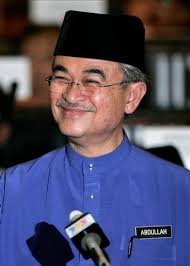 Yong said towards this end, Sabahans wanted to know, among others, if the Chief Minister and his Cabinet knew about this "surrender of its maritime territory" by then Prime Minister Tun Abdullah Ahmad Badawi.
 Penampang: There is nothing stopping the people of Sabah from calling upon the State Government to seek a re-negotiation with the Federal Government and Petronas on the quantum of oil royalty.
 KUALA LUMPUR, 16 Dis (Bernama) -- Rang Undang-undang Cukai Barang dan Perkhidmatan 2009 yang menyediakan peruntukan bagi mengenakan dan memungut cukai barang dan perkhidmatan (CBP) dan bagi perkara-perkara yang berkaitan dengannya, dibentangkan di Dewan Rakyat Rabu.
 Menurut rang undang-undang itu, CBP meliputi semua sektor industri dan ialah suatu cukai ke atas penggunaan terakhir barang dan perkhidmatan, dan ia dipungut melalui suatu sistem kredit yang ditanggung atas input diimbangkan terhadap CBP yang dikenakan ke atas output.
 Ahmad Husni berkata kerajaan akan memberi pengecualian cukai itu bagi barang-barang perlu seperti produk pertanian termasuk padi dan sayur-sayuran serta
  bahan makanan utama seperti beras, gula, tepung, minyak masak, ikan, daging dan ayam agar ia tidak membebankan rakyat terutama golongan miskin dan yang berpendapatan rendah.
 Beliau berkata CBP akan dapat mengurangkan amalan birokrasi dalam pengurusan dan pentadbiran sistem percukaian dan mengatasi kelemahan yang kini terdapat dalam cukai jualan dan perkhidmatan.