Memaparkan catatan dengan label H1N1. Papar semua catatan

Sabtu, Disember 05, 2009

SOUTH KOREAN TEENAGER IN COMA AFTER ANTI-FLU VACCINE SHOT

SEOUL, Dec 5 (Bernama)-- A South Korean teenager has fallen into a coma after receiving an anti-flu vaccine, health authorities said Saturday, Yonhap news agency reported.

According to the officials in the city of Pocheon, 45 km north of Seoul, the 13-year-old student has now been unconscious for nine days, after being hospitalized with a cerebral hemorrhage.

He initially fell unconscious at school having previously suffered hallucinations a day after he was inoculated with the new H1N1 vaccine as part of a nationwide effort to take preventive measures against the flu.

Authorities said it remains unclear whether the flu vaccine was a cause of the cerebral hemorrhage.

Last month, a South Korean student whose identity was not revealed died of cerebral homorrhaging three days after receiving the new A/H1N1 vaccine.

Khamis, September 17, 2009

FACE MASKS INADEQUATE AGAINST A/H1N1 FLU: AUSTRALIAN EXPERT

CANBERRA, Sept 17 (Bernama) -- An Australian expert warned on Thursday face masks offer little protection against airborne viruses such as A/H1N1 flu.

Professor Raina MacIntyre, who led a world-first study in Beijing, comparing different masks' effectiveness, said health workers involved in any frontline response to pandemic flu should instead be wearing the more expensive N95 respirator.

A N95 respirator looks similar to a surgical mask though it fits tightly to the face, and it has thicker mesh designed to filter 95 percent of particles from the air, reported China's Xinhua news agency, citing MacIntyre as saying.

"For healthcare workers, really they should be using N95 respirators because surgical masks do not offer significant protection," MacIntyre said.

"What we found was that the N95 masks were protective against .. . clinical respiratory illness and laboratory-proven viral infections, but the surgical masks were not."

Monitoring of 2,000 doctors and nurses after four weeks showed the illness rate for those wearing surgical masks was 7 percent compared to 4 percent for those wearing N95 masks.

The research is expected to meet some resistance from health authorities, and possibly health workers, as the N95 respiratory masks can cost 5 to 10 times the price of surgical masks.

Each worker must also be fitted with an N95 mask, a process that must be repeated annually, while some have complained the masks are too restrictive to work in.

Isnin, September 14, 2009

KIT ELAK JANGKITAN WABAK H1N1 KETIKA RAYA

"Kit H1N1 boleh disediakan sendiri dan perlu sentiasa dibawa. Hanya perlu ada tiga komponen untuk melengkapkan kit itu yang mempunyai

pencuci tangan antikuman,

topeng penutup mulut serta hidung dan

tisu,"

Ketua Pengarah Kesihatan, Tan Sri Dr Mohd Ismail Merican

Isnin, Ogos 31, 2009

TIADA TANDA H1N1 TUKAR BENTUK KEPADA VIRUS LEBIH TERUK

PULAU PINANG, 30 Ogos (Bernama) -- Tiada tanda-tanda virus Influenza A(H1N1) berubah bentuk menjadi virus lebih teruk di negara ini, kata Menteri Kesihatan Datuk Seri Liow Tiong Lai.

Beliau berkata Institut Penyelidikan Perubatan (IMR) sentiasa memantau perkembangan wabak itu dan tidak ada laporan mengenai perkara itu dimaklumkan kepadanya.

"Sehingga sekarang ia masih virus A(H1N1) dan belum ada perubahan baru kepada virus itu dikesan," katanya kepada pemberita selepas menghadiri majlis dialog antara MCA dan persatuan-persatuan masyarakat Cina di Pulau Pinang di sini pada hari Ahad.

Beliau berkata demikian ketika diminta mengulas amaran yang dikeluarkan Pertubuhan Kesihatan Sedunia (WHO) mengenai kewujudan influenza yang lebih teruk daripada A(H1N1) yang boleh menyerang paru-paru dan menyebabkan sakit yang teruk kepada orang yang dijangkiti.

Liow berkata walaupun tiada jangkitan virus A(H1N1) jenis teruk dicatatkan di negara ini, pihaknya akan menjalankan pemantauan berterusan dengan pasukan khas mengadakan ujian saringan berkala.

"Orang ramai akan dimaklumkan sekiranya terdapat penularan virus jenis teruk itu dan di peringkat ini semua pihak diminta menjaga kesihatan dan kebersihan serta mematuhi langkah berjaga-jaga yang disarankan kementerian," katanya.

Ahad, Ogos 30, 2009

WHO DEDAH KEMUNCULAN INFLUENZA A LEBIH TERUK

WASHINGTON: Pertubuhan Kesihatan Sedunia (WHO), berkata pihaknya menerima laporan kemunculan virus selesema babi (H1N1) jenis teruk yang terus menyerang paru-paru menyebabkan penghidapnya sakit tenat serta perlu menjalani rawatan mahal di hospital.

Virus jenis teruk itu turut dilaporkan boleh menyebabkan pesakit muda yang tidak mempunyai masalah kesihatan jatuh tenat.

WHO ketika melaporkan perkembangan terkini wabak selesema babi menyatakan, sehingga 15 peratus pesakit dimasukkan ke hospital dengan virus H1N1 baru itu memerlukan penjagaan rapi, sekali gus meningkatkan lagi bebanan kepada sistem penjagaan kesihatan sesebuah negara.

"Pada musim dingin di Hemisfera Selatan, beberapa negara mengakui keperluan menambah unit penjagaan rapi menjadi beban terbesar dalam perkhidmatan kesihatan.

"Langkah persediaan mesti berupaya memenuhi tuntutan yang semakin meningkat terhadap unit penjagaan rapi selain memastikan ia mencukupi jika jumlah penghidap bertambah secara mendadak," kata WHO dalam laporannya.

WHO sebelum ini melaporkan bahawa H1N1 sudah berada pada peringkat wabak di Jepun, sekali gus memberi isyarat kemungkinan berlakunya musim influenza yang panjang tahun ini dan memburukkan lagi keadaan di wilayah tropika.

"Perkara paling jelas, kalangan doktor dari seluruh dunia sudah mula melaporkan jenis selesema babi paling teruk, menyerang golongan muda dan orang sihat, yang jarang dilihat ketika musim influenza.

"Virus menyerang terus ke paru-paru pesakit dan menyebabkan kegagalan pernafasan yang teruk. Usaha menyelamatkan mereka memerlukan penjagaan di unit rawatan rapi untuk tempoh lama dan menelan belanja besar," kata laporan itu lagi. - Reuters

Isnin, Ogos 10, 2009

H1N1 - MOST PATIENTS RECOVER WITHOUT MEDICAL ATTENTION

KUCHING, August 10, 2009: Most Influenza A (H1N1) patients recover fully without requiring medical attention and antiviral if they have uncomplicated febrile respiratory illness.
Those infected with the virus, particularly with mild symptoms, should rest at home until they (symptoms) disappeared, said infectious diseases expert at Sarawak General Hospital Dr Chua Hock Hin.

“There is no need for patients to rush to clinic or hospital because they will recover in a few days,” he said, adding that mild illness would get symptomatic treatment and home care advice.

According to the Ministry of Health’s policy on the H1N1 virus, Dr Chua said only those with moderate to severe illness would be tested.
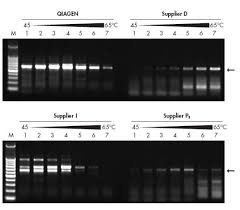
“The test, real-time RT-PCR for H1N1 is costly. It costs about RM880 each,” he told a seminar on Influenza A (H1N1) organised by Sarawak United People’s Party (Pending branch) at Kenyalang Park Community Association hall here yesterday.

Pointing out that everyone shouldered the responsibility of stopping the spread of H1N1 virus, Dr Chua said those having flu or similar symptoms should initiate self-quarantine and avoid social gathering.
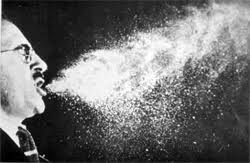
“If you have a flu, be extra mindful and keep a distance from people around to prevent from spreading the virus.”
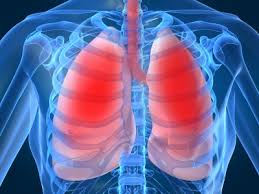
As of Aug 8, he said Malaysia registered 1,578 positive cases of H1N1 with 64 per cent local transmissions and the rest imported while 18 deaths were recorded with a majority of them caused by pneumonia.

He said the local communities must be enlightened on what H1N1 was all about, how it was transmitted, the complications as well as the vulnerable groups.

He feared that the death toll would continue to rise if there was a lack of public awareness while some people remained ignorant of the risk of the virus.

“The flu is already circulating in the community with some schools closed down and people wearing masks. People have to understand that H1N1 is a new virus that causes flu, and it spreads easily because we do not have immunity to it.”

The incubation period of H1N1 virus was between one and seven days while the infectivity period was a day before the onset of symptoms to seven days after onset of symptoms or until resolution of symptoms, he said.

He added that those aged from five to 45 years, especially pregnant women and obese individuals, were more susceptible to the virus.

He added that the vaccine would be made available in Malaysia in December.
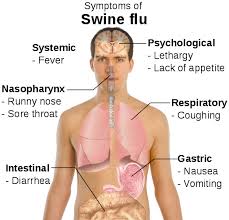
Symptoms of being infected with H1N1 virus are high fever (of more than 37.8 Celsius), cough, sore throat, runny nose, chills, headache, myalgia, fatigue, diarrhoea and vomiting.

A more severe form includes pneumonia, myocarditis and encephalitis.

Dr Chua cautioned that those with low immune system were exposed to risk of secondary bacterial infection, which was one of the complications for H1N1.

“The virus will exacerbate underlying chronic medical conditions such as asthma. Other complications include pneumonia, myocarditis leading to heart failure or arrhythmia.”

Pregnant women of second and third trimester, equivalent to 14 weeks of pregnancy, and low immunity people (aged below five and above 65), cancer patients, kidney failure patients, transplant patients and those on steroid, having heart or lung problems were more likely to get complications, he said.
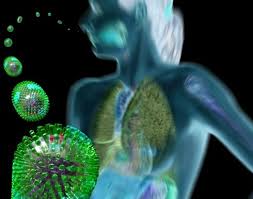
H1N1 virus can stay two to eight hours, he said, adding that it could be transmitted through cough and sneezes.

He thus advised people to observe and practise a six-foot distance from others, particularly those having flu, coughing or sneezing, and to practise good personal hygiene.

“Wash your hands as many times as possible, avoid crowded places if you are unwell and put on a surgical masks over your mouth and nose.

“Do not smoke and eat a balanced diet with plenty of fruit and vegetables. Practise using a serving spoon when sharing food at meal times,” he said.

Khamis, Ogos 06, 2009

AMIR AKRAM CUMA DEMAM SATU MALAM

Oleh ROSLI HASSAN
rosli@kosmo.com.my

JASIN - Walaupun tanggapan umum bahawa demam akibat jangkitan selesema babi atau H1N1 mungkin berlanjutan beberapa hari, bagi seorang budak berusia 12 tahun, Amir Akram (gambar), dia hanya sakit untuk semalaman sahaja sebelum menghembuskan nafas terakhir.

Sebelum disahkan meninggal dunia di Hospital Melaka akibat wabak maut itu pada Isnin lalu, Akram bersama keluarganya menghadiri satu majlis kenduri kahwin di Gemencheh, Negeri Sembilan pada hari Ahad.

Bapanya, Nor Azman Aziz, 41, berkata, pada waktu itu arwah kelihatan cergas seperti biasa sebelum suhu badannya meningkat pada sebelah malam.

Ahad, Ogos 02, 2009

H1N1: ADVICE ON SCHOOL TRIAL EXAMS

image Ranau, August 02, 2009: Schools in Sabah have been advised to reschedule their Penilaian Menengah Rendah (PMR) and Sijil Pelajaran Malaysia (SPM) trial examinations due to the pandemic Influenza A(H1N1) which has forced the temporary closure of 20 schools in the State so far.

Sabah Tourism, Culture and Environment Minister Datuk Masidi Manjun, who is also the State Executive Councillor for Education, said Saturday that though he had no authority to instruct schools to stop going ahead with the examinations, it was advisable that the schools as well as parents, through the parent-teacher association, act on finding ways to resolve the matter.

image "They (schools) are not in the position to put the children under unnecessary risk in schools, even if it is for examinations. They are not even government examinations. Even the Government changes the examination dates on certain occasions.

"But I can understand and appreciate that a number of very hardworking schools want to get things done as soon as possible. I'm sure there are enough school days for them to rearrange the examination period," he said after the opening of the Ranau Umno Division delegates meeting, here.

Masidi also reiterated his suggestion on Wednesday of closing all schools, especially in high-risk towns like Kota Kinabalu, in order to determine the number of infected students.

He said the virus would incubate in a human body for four days and the closing of schools for a week was enough time for the schools and the health department to ascertain which students should be separated from the rest to avoid further spread.

"I think this is the only way to go right now because there is no effective medicine to cure this virus.

"At least we can reduce the potential risk of the spread of the virus in the schools," he added.

Jumaat, Julai 31, 2009

SELESEMA BABI MEMBIMBANGKAN

image''Perkembangan H1N1 di Sabah yang berlaku sekarang ini telah menimbulkan kebimbangan pelbagai pihak berikutan berlaku peningkatan kes jangkitan baru virus H1N1 khususnya di kalangan pelajar sekolah di negeri ini.

image''Keadaan ini agak membimbangkan dan ia sesuatu yang amat mengejutkan kerana berdasarkan laporan, mereka yang dijangkiti adalah pelajar sekolah yang tidak ke luar negara, bermakna mereka dijangkiti virus ini di dalam negara,"

''Kalaulah mereka tidak ke luar negara tetapi dijangkiti H1N1, ia membahayakan kerana ia sudah menjadi wabak tempatan.

image ''Justeru, kita minta supaya Jabatan Kesihatan mengadakan siasatan atau kajian yang lebih menyeluruh supaya jangkitan H1N1 di Sabah dapat dicegah atau sekurang-kurangnya dikawal.

image ''Kita juga mahu pihak berkenaan menyebarkan maklumat pencegahan khususnya kepada ibu bapa memandangkan berlakunya peningkatan jangkitan virus ini di kalangan murid-murid sekolah,"

image ''Kita mahu pihak berkenaan memberikan maklumat dan nasihat supaya orang ramai terutama pelajar dilindungi daripada jangkitan wabak ini,"


Timbalan Ketua Menteri, Datuk Joseph Pairin Kitingan

Jumaat, Jun 26, 2009

INFLUENZA : DUA KELAS SMK ABDUL RAHIM 2, KUDAT, SABAH DITUTUP

image PUTRAJAYA, 26 Jun (Bernama) -- Dua kelas di Sekolah Menengah Kebangsaan Abdul Rahim 2, Kudat, Sabah ditutup semalam berikutan penularan Influenza A (H1N1) di sekolah berkenaan, membabitkan 125 murid dan guru diarah untuk kuarantin di rumah.

image Ketua Pengarah Kesihatan Tan Sri Dr Mohd Ismail Merican berkata penularan wabak itu adalah daripada seorang guru berumur 24 tahun di sekolah berkenaan, yang bercuti ke Istanbul selama 17 hari, kembali ke Malaysia pada 18 Jun lalu dan kembali mengajar pada 22 Jun 2009.

image "Beliau hanya menunjukkan gejala demam dan batuk pada 23 Jun, telah pergi mendapatkan rawatan di Hospital Kudat pada hari sama, kemudian dirujuk ke Hospital Queen Elizabeth, Kota Kinabalu dan disahkan positif H1N1 semalam," katanya kepada pemberita di sini Jumaat.

image Beliau berkata lapan ahli keluarganya turut dikuarantin di rumah dan kes itu menyumbang kepada 14 kes baru wabak H1N1 yang dilaporkan di Malaysia hari ini, yang terdiri daripada 13 kes import dan satu kes jangkitan tempatan.

Katanya ini menjadikan jumlah terkumpul kes H1N1 sehingga pukul 8 pagi ini berjumlah 105 kes iaitu 90 kes import dan 15 kes jangkitan tempatan. Tiada kematian dilaporkan.

Mohd Ismail berkata 14 kes baru itu adalah 10 kes melibatkan warganegara Malaysia dan empat melibatkan warga asing, Australia (tiga) dan Filipina (satu).

image Katanya 13 kes import melibatkan mereka yang melawat bandar di negara terjejas dengan wabak H1N1 iaitu Melbourne (5), London (3), Phuket (2), Manila (1), Istanbul (1) dan Singapura (1) manakala satu kes jangkitan tempatan melibatkan kes warga tempatan.

Beliau berkata jumlah sekolah atau institusi latihan yang sedang dikenakan tindakan tutup keseluruhan sekolah kekal empat buah, melibatkan 2,300 pelajar, guru dan petugas.

Katanya jumlah murid yang terlibat dalam penutupan kelas termasuk dua kelas yang ditutup selama tujuh hari di Sekolah Menengah Kebangsaan Abdul Rahim 2, Kudat, Sabah ialah seramai 625 orang.

image Semua ibubapa hendaklah memastikan anak-anak mereka yang dikenakan tindakan kuarantin di rumah berada di rumah dan tidak pergi ke tempat-tempat awam bagi mengelak berlakunya jangkitan tempatan.